For Florida boaters, a Bahamas trip can be an easy decision. Making sure the boat is properly equipped before crossing is the part that deserves a little more attention.
One requirement that has become especially important is AIS, or Automatic Identification System.
Changes to Bahamian law that took effect July 1, 2025 require foreign vessels measuring 50 feet and over to have a properly functioning AIS onboard while in Bahamian waters. The system must remain turned on at all times.
That includes when the vessel is:
- Docked in The Bahamas
- Traveling through Bahamian waters
- Simply passing through Bahamian waters
So if you’re running a 50-foot-or-larger U.S. boat over to The Bahamas, AIS is no longer something to leave on the “maybe” list.
What Does AIS Actually Do?
AIS allows vessels to electronically broadcast and receive important vessel information.
Depending on the equipment and installation, that can include information such as vessel identity, position, course and speed.
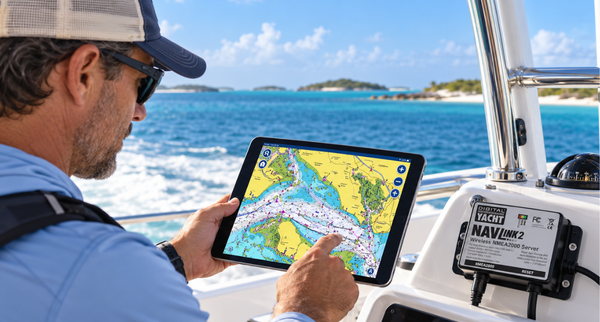
On a compatible chartplotter, AIS targets can appear directly on the chart. This can give you another layer of situational awareness when crossing busy shipping lanes, running in reduced visibility or approaching crowded ports.
It doesn’t replace radar or good seamanship, but it can be a valuable addition to both.
What About Boats Under 50 Feet?
The specific Bahamas requirement discussed above applies to foreign vessels 50 feet and over.
That doesn’t mean AIS has no value on a 30-, 35- or 40-foot boat.
Plenty of recreational boaters install AIS voluntarily because they want better awareness of commercial traffic and other AIS-equipped vessels, particularly when making offshore crossings.
The right setup depends on how and where you use the boat.
You’ll Need an MMSI Too
Installing an AIS transponder is only part of the process.
AIS equipment uses a Maritime Mobile Service Identity, or MMSI, which is a unique nine-digit number associated with the vessel.
For a recreational U.S. vessel staying only in U.S. waters, an MMSI can generally be obtained through an approved organization.
But if you are taking the vessel to a foreign port, including The Bahamas, you’ll need to make sure you have the proper FCC-issued MMSI and licensing for international travel.
That distinction is important and should be sorted out before departure.
Already Have an MMSI?
Don’t immediately assume you need another one.
First find out who issued the MMSI currently programmed into your boat.
If it was originally obtained for domestic use and you’re now preparing for international travel, you may need to transition to an FCC-issued MMSI.
This is something to sort out before leaving for The Bahamas, especially because changing the MMSI programmed into an AIS unit may require assistance from the equipment manufacturer, installer or retailer.
Preparing for Your Next Bahamas Trip
If The Bahamas is on your fishing calendar, check the boat well before departure.
For vessels 50 feet and over, confirm that you have a functioning AIS system and that it is properly configured and transmitting the correct vessel information.
Even on smaller boats, it can be worth discussing whether adding AIS makes sense for the type of offshore traveling you do.
And while you’re checking the electronics, it’s a good opportunity to review the rest of the helm too: VHF, GPS, chartplotters, radar, antennas and networking.
A Bahamas crossing is not the time to discover that something hasn’t been configured correctly.
If you need an AIS unit, VHF, chartplotter or other electronics before your next Bahamas trip, Right Side Marine can help you get your boat equipped.
Shop marine electronics and boating equipment at RightSideMarine.com.
Boating and communications requirements can change. Always confirm current Bahamian requirements and U.S. FCC/Coast Guard licensing requirements before an international trip.